

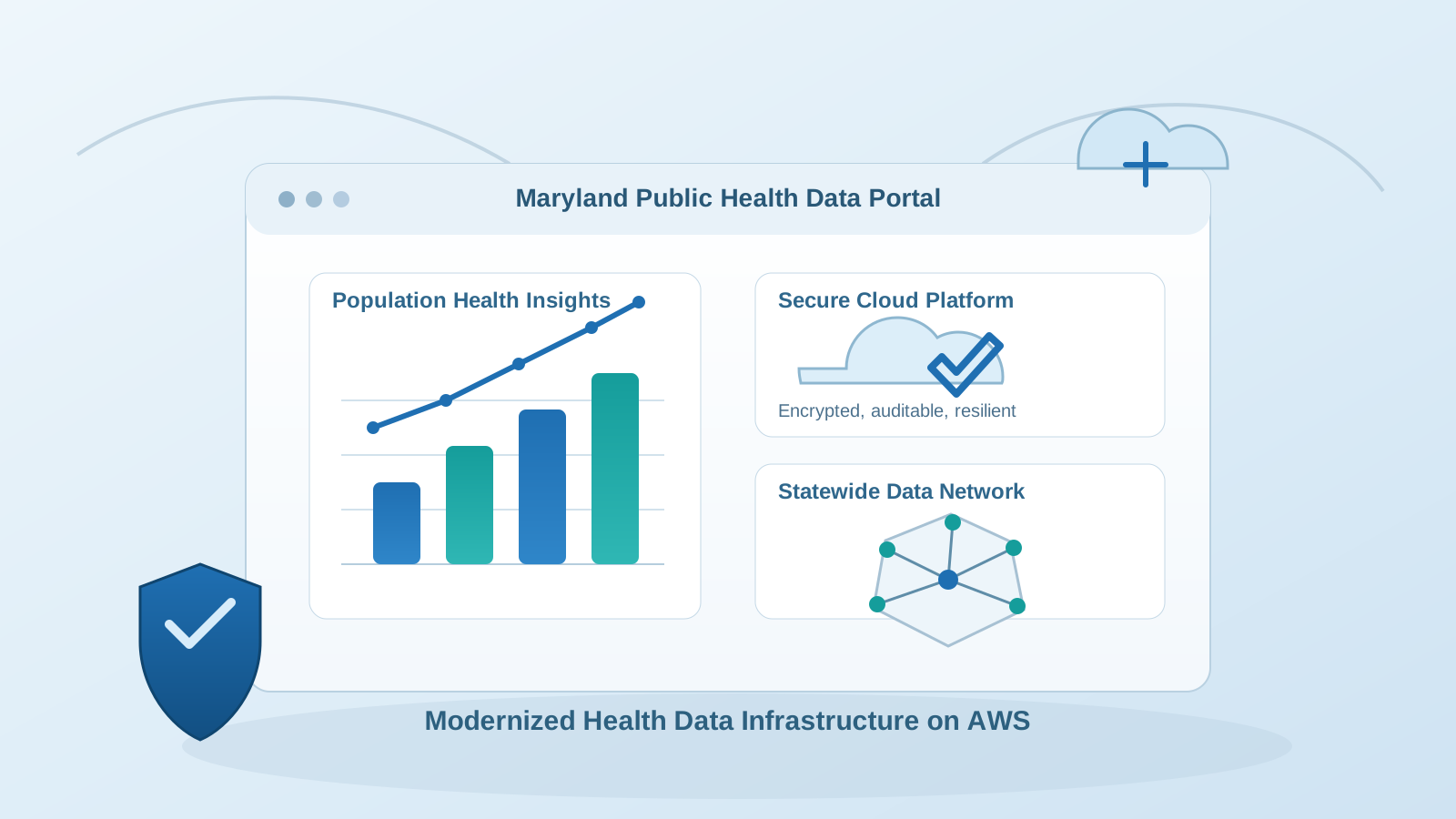
The Maryland Department of Health is Maryland's state public health agency, responsible for delivering health programs and data services statewide. The department needed to modernize legacy health data systems that were limiting scalability, security, and analytics across critical public health programs. ASCENDING delivered a secure AWS-based data architecture and a custom web portal that improved data accessibility, enabled real-time analytics, and strengthened resilience with multi-region disaster recovery.
BackgroundLegacy Health Data Systems Limiting Public Health Operations
The Maryland Department of Health's data environment is the operational backbone for statewide public health reporting and decision-making. The Maryland Department of Health was operating legacy infrastructure that made it difficult to efficiently manage and distribute health information across the state. As reporting requirements and data volumes increased, the department needed a more scalable and secure platform that could support modern public health decision-making.
The modernization effort required a cloud-native approach that could improve analytics speed, support secure access patterns, and align with strict NIST security requirements while avoiding disruption to ongoing public health operations.
The ChallengeScaling Health Data Analytics While Meeting NIST Security Requirements
The challenge is a legacy health data environment that limited scalability, security, and disaster recovery for mission-critical public health systems. The department needed to transform health data operations while maintaining continuity for mission-critical public services.
- Legacy systems could not efficiently support large-scale analytics and reporting workloads.
- Security controls and compliance mechanisms needed to be strengthened to meet NIST expectations.
- Disaster recovery capabilities were limited for systems supporting critical health functions.
- Data access was fragmented across systems, reducing collaboration efficiency across teams.
- Leadership needed real-time visualization and business intelligence for faster public health decisions.
An AWS Advanced Consulting Partner for Public Sector Health Data
ASCENDING is an AWS Advanced Consulting Partner with hands-on public sector delivery experience and Data Competency certification for health-focused cloud engagements. ASCENDING was selected because the engagement required hands-on AWS architecture expertise, public sector delivery experience, and practical implementation of security controls for sensitive health data.
As an AWS Advanced Consulting Partner with Data Competency and Public Sector Partner certifications, ASCENDING brought the capability to design a modern, compliant, and scalable health data platform while maintaining operational stability during the transition.
The SolutionA Secure AWS Data Architecture and Public-Facing Health Portal
The solution is a secure, serverless AWS data architecture paired with a custom public-facing portal for health data access and visualization. ASCENDING designed and implemented an AWS cloud architecture with secure data storage, serverless analytics, governance controls, and a custom public-facing web portal for health data access and visualization.
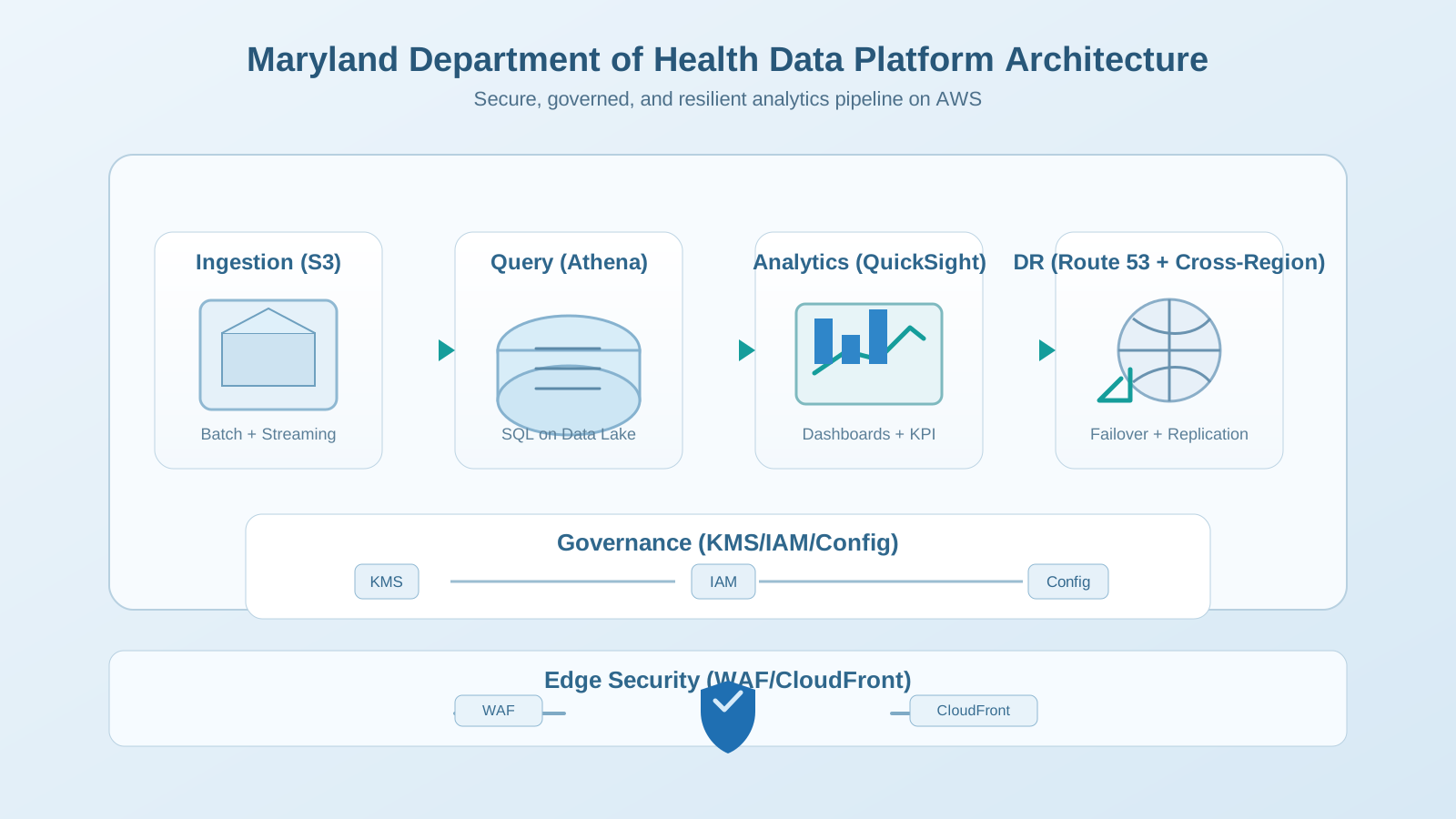
- Migrated health data workloads to Amazon S3 with encryption and lifecycle policies across training, testing, and production environments.
- Implemented Amazon Athena and Snowflake integration to support high-performance analytics and near real-time querying without complex ETL dependencies.
- Enabled interactive dashboards through Amazon QuickSight for public health insight and business intelligence reporting.
- Applied layered security using AWS KMS, AWS WAF, Amazon CloudFront, AWS IAM RBAC policies, and AWS Config compliance monitoring.
- Built multi-region resilience with S3 cross-region replication, Amazon Route 53 failover routing, and observability through AWS CloudTrail and Amazon CloudWatch.
- Delivered a responsive public web portal to improve secure, user-friendly access to health data on desktop and mobile devices.
A Modernized, NIST-Aligned Platform for Statewide Health Data
The outcome is a modernized, NIST-aligned health data platform with faster analytics and stronger resilience for the department. The modernization established a secure and scalable foundation for statewide health data operations and improved the department's ability to deliver timely insight.
- Achieved full alignment with NIST security standards for the implemented platform controls.
- Improved analytics responsiveness through real-time serverless querying and interactive visualization.
- Strengthened business continuity with multi-region replication and automatic DNS failover.
- Reduced infrastructure burden by replacing legacy patterns with cloud-native managed services.
- Improved public and departmental access to health data through a responsive web portal.
Built with AWS Data, Security, and Resilience Services
Frequently Asked Questions
How long does a health data modernization like this typically take?
Timeline is a phased migration that starts with the highest-priority data workloads and security controls, then expands to analytics, visualization, and the public portal as each layer is validated in production.
How is sensitive health data protected throughout the migration?
Security is enforced through layered controls — encryption, network protections, and IAM policies — applied consistently across every environment so sensitive health data stays protected in transit and at rest.
Does the new platform integrate with existing analytics tools like Snowflake?
Integration is designed to work alongside existing analytics investments, so serverless querying through Amazon Athena and Snowflake can operate together without requiring a full replacement of the department's existing tooling.
How does ASCENDING keep the platform reliable across regions?
Reliability is achieved through multi-region replication, automated failover, and operational practices aligned with the AWS Well-Architected Framework, keeping critical health data systems available even during regional disruptions.