ASCENDING Home
Contact Us

Buyer guide · Reviewed October 2026

How Should You Compare Enterprise MCP Gateways?

Jarvis Registry by ASCENDING gives enterprise teams a customer-hosted catalog and gateway for governed access to registered MCP resources. Compare the same useful workflow across your shortlist: an allowed user finds a resource and completes a permitted action, while a restricted user is denied.

Start with the MCP Gateway guide and two-user access walkthrough, then verify the behavior in the version and deployment you intend to operate.

Compare control points

Choose the control point

Do not compare registries, gateways, and API management as if they are the same product

Start with the control problem, then compare vendors that solve that job. The official MCP Registry is a public catalog; its own documentation recommends a private registry for private servers. A successful gateway sign-in does not grant permission to every backend record. Check server authorization and business-system permissions separately.

Enterprise MCP and agent governance control points
Control pointPrimary jobQuestion it answers
Public MCP registryPublishes metadata for publicly available MCP servers.Where can developers discover public servers?
Private MCP registryCatalogs the MCP servers an organization has reviewed and approved.Which tools are approved, owned, and discoverable internally?
MCP gatewayAuthenticates, authorizes, routes, and observes MCP tool calls at runtime.Can this user or agent invoke this tool right now?
Agent registryTracks agent ownership, capabilities, versions, approvals, and lifecycle.Which agents can teams trust and which version is current?
Agent gatewayApplies policy and routing to agent-to-agent calls across runtimes.How should one agent discover and invoke another?
Existing API gatewayContinues to govern application APIs and non-MCP traffic.Which existing controls can we keep, and what MCP-specific layer is missing?

Reference: official MCP Registry documentation.

Evaluation checklist

Eight questions every enterprise MCP gateway should answer

01

Deployment boundary

Confirm where the control plane and runtime traffic run, including external models and tools.

Ask to see: Architecture and deployment instructions.

Test: Map the client, gateway, server, database, model, and telemetry destinations.

02

Discovery and catalog

Check how reviewed servers, tools, agents, owners, and versions enter the catalog.

Ask to see: Registration, review, and discovery workflow.

Test: Register one resource and compare discovery for an allowed and a restricted user.

03

Identity and authorization

Separate permission to operate the Registry, reach a server, and access backend records.

Ask to see: Supported sign-in flows, operation scopes, resource ACLs, and backend credential model.

Test: Run the same permitted and denied actions with two identities in the proposed deployment.

04

Runtime enforcement

Verify where authorization is enforced and which routes can bypass that control point.

Ask to see: Gateway and direct-proxy behavior, credential scope, and revocation design.

Test: Remove resource access and attempt new requests through every route in scope.

05

MCP and agent coverage

Separate MCP tool calls from agent-to-agent calls; support for one does not establish the other.

Ask to see: Supported protocols, transports, and version-specific limitations.

Test: Connect the actual client and resource types your pilot needs.

06

Observability and audit

Compare the investigation fields you require with the events and traces the deployment actually emits.

Ask to see: Real output, exporter configuration, access controls, and retention settings.

Test: Reconstruct an allowed and denied request without assuming that a metric contains per-call policy evidence.

07

Lifecycle operations

Assign ownership for approving, changing, and retiring registered resources.

Ask to see: Change, recovery, and retirement procedures.

Test: Update and retire a test resource, then check discovery and invocation again.

08

Implementation ownership

Price the work around the software, including identity integration, operations, upgrades, and incident support.

Ask to see: Named operating owners and a recovery plan.

Test: Review an upgrade, credential rotation, backup restore, and service-failure scenario.

Regulated-data evaluation

Four checks before connecting sensitive data

Map the whole request route

Identify the client, gateway, server, business system, model provider, and telemetry destination. Use a marked synthetic value to check where content is transmitted or retained. Customer hosting alone does not establish that every request stays private.

Test records and actions separately

Passing a server-access check does not establish backend record permissions. Test both identities against the intended records and actions, and identify whether the backend sees a user credential or a shared account.

Inspect actual investigation evidence

Agree the required identity, action, decision, time, retention, and export fields with your security owner. Compare them with real output; operational metrics and agent traces do not automatically supply a complete policy audit record.

Confirm the assessment scope

Software features can support controls, but private deployment does not confer a certification. Confirm which service or organization an assessment covers and name the infrastructure, data, and operating responsibilities retained by your team.

Starting shortlist

Examples of enterprise MCP gateway and registry approaches

This is a scope comparison, not a ranking. Product availability changes quickly, so use the linked first-party pages to confirm current features, editions, and deployment terms during procurement.

Jarvis Registry

Customer-hosted MCP and agent governance, with registry, gateway, lifecycle, and implementation support across AWS and Azure environments.

ASCENDING product overview

AWS AgentCore Gateway and Registry

AWS-managed gateway and registry services for discovering and governing agents, tools, and resources in an AWS-centered architecture.

AWS documentation

Microsoft Azure API Center and AI Gateway

Azure services for MCP server inventory and governance of MCP tool access through the Microsoft Foundry ecosystem.

Microsoft Learn

Kong MCP Registry

MCP discovery and governance integrated with Kong's broader API and AI gateway platform.

Kong product page

Obot

An open-source enterprise AI control plane and MCP gateway offered for self-hosted or managed use.

Obot product page

TrueFoundry MCP Gateway

MCP gateway capabilities within a broader AI platform, with publicly documented VPC, on-premises, air-gapped, and multi-cloud deployment options.

TrueFoundry product page

Where Jarvis fits

Choose Jarvis when governance has to span tools, agents, and cloud teams

  • You want the Jarvis governance layer deployed in a customer-controlled environment.
  • You need MCP tool access and agent lifecycle controls in the same architecture.
  • Your teams operate across AWS and Azure and need one implementation partner.
  • You want buyer evaluation to include discovery, policy, traces, and rollout support.

Jarvis may not be the shortest path when

You only need a public server catalog, a local single-developer proxy, or a gateway that is already bundled into a platform your organization has standardized on.

For any customer-hosted option, document the actual route to external model and tool providers. Hosting location alone does not prove that every request stays inside one account.

Build or buy

Price the governance system, not only the proxy

A working MCP router is only one part of a production control plane. A build decision also assigns long-term ownership for identity federation, credential lifecycle, policy evaluation, catalog curation, audit retention, telemetry, upgrades, and incident response.

Build can fit

A small, stable, internal scope

Consider an internal build when a platform team owns a limited set of services, has capacity to maintain the control plane, and can prove every security and audit requirement.

Buy can fit

Shared, regulated, or multi-team infrastructure

Evaluate a product when multiple teams, identity domains, environments, or compliance requirements make the surrounding governance work larger than the routing layer.

Documentation and evaluation

Check documented controls against your deployment

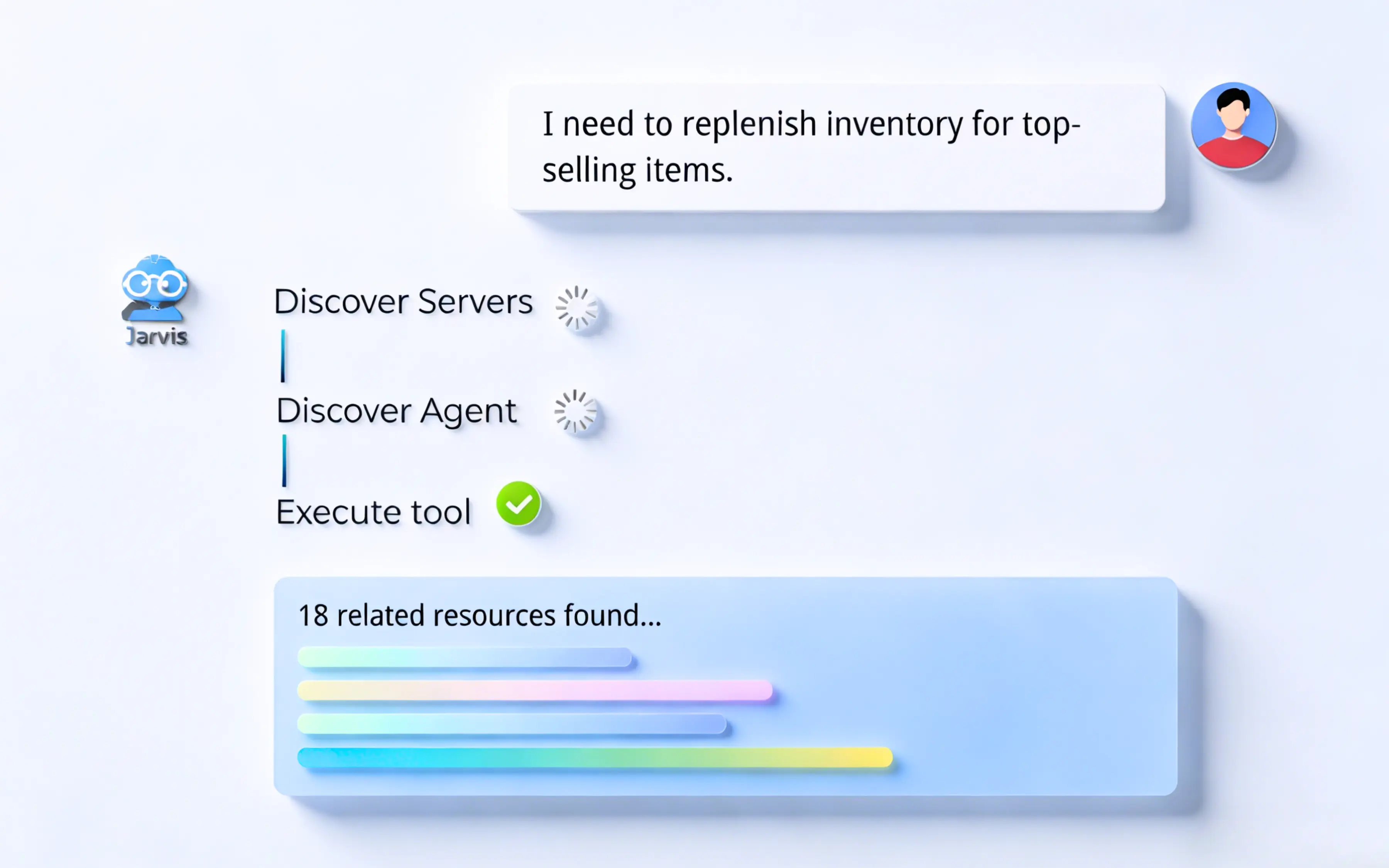
Conceptual illustration of Jarvis discovering servers and agents before executing a tool; not a product screenshot

Make approved tools discoverable

Illustration, not a product screenshot. Jarvis Registry brings registered MCP servers and agents into a permission-aware catalog. Test allowed and restricted discovery with the published two-user walkthrough.

Review the two-user access test
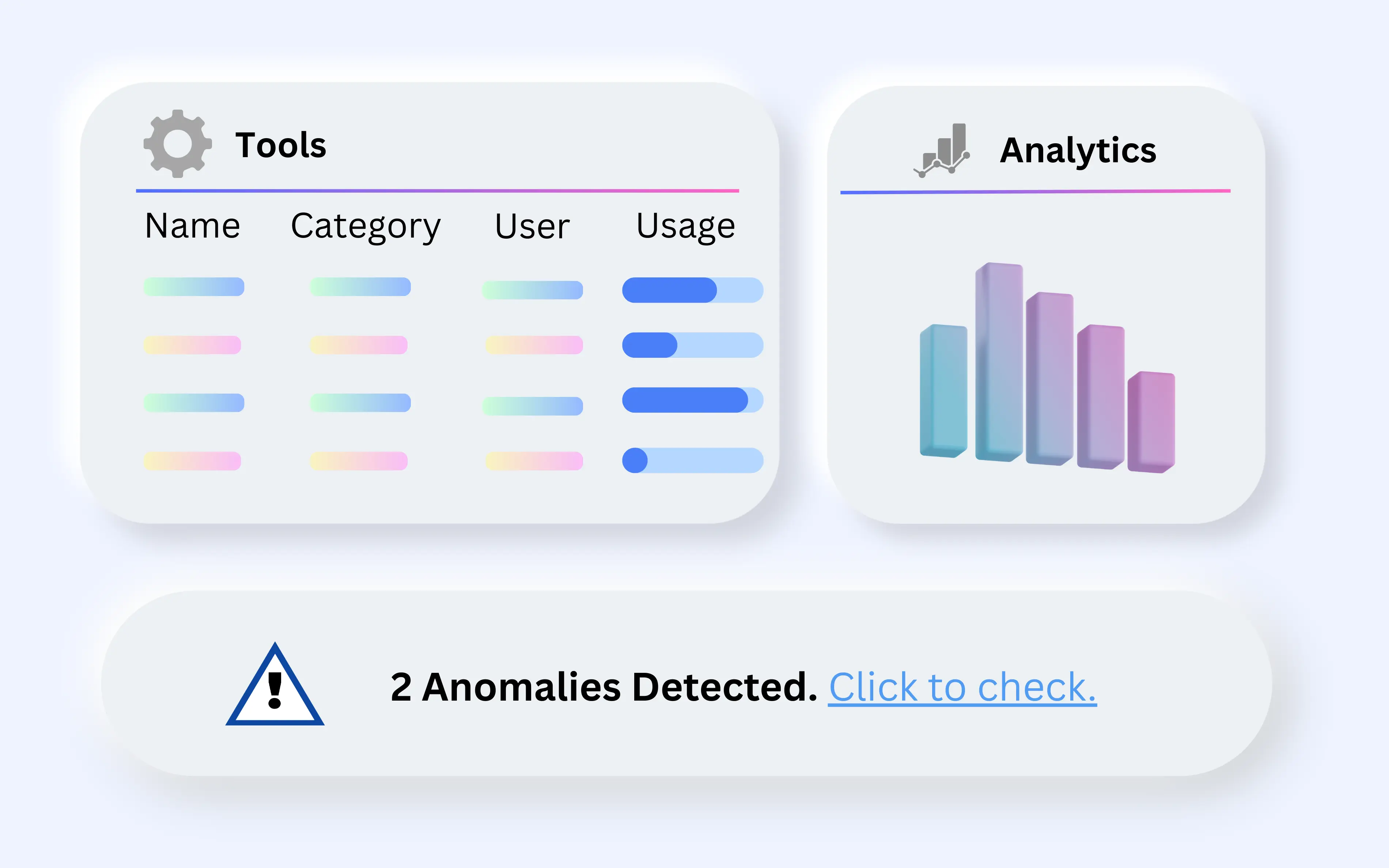
Conceptual tools-and-analytics illustration with usage bars and an anomaly label; not a product screenshot or evidence of anomaly detection

Inspect the available operational evidence

Illustration, not a product screenshot or proof of anomaly detection. The observability guide describes operational metrics and instrumented agent traces. Ask for real output to verify any additional identity, policy-decision, retention, or export requirements.

Review documented metrics and traces

Questions buyers ask

Enterprise MCP gateway comparison FAQ

What is the difference between an MCP gateway and an MCP registry?

An MCP registry catalogs servers and their metadata so approved capabilities can be discovered. An MCP gateway sits in the runtime path to authenticate, authorize, route, and observe tool calls. An enterprise program may use both.

Do we need an MCP gateway if we already have an API gateway?

Keep the API gateway for application API traffic. Then test whether it can also handle MCP discovery, client and workload identity, per-tool authorization, credential flows, protocol changes, and tool-call traces. A dedicated MCP layer is useful when those jobs would otherwise become custom extensions.

Should we build or buy an enterprise MCP gateway?

Building can fit a small, stable internal scope when a platform team can own identity, policy, credential lifecycle, telemetry, upgrades, and incident response. Buying is usually easier to justify when the gateway is shared across teams, environments, or regulated workflows.

What should we verify before choosing a customer-hosted MCP gateway?

Verify where the control plane runs, where runtime traffic flows, which external model and tool providers receive requests, how identity and secrets are handled, what audit data is retained, and who owns upgrades and support. Customer-hosted software does not by itself prove that every configured request stays inside one account.

Plan the evaluation

Bring one MCP server, two user roles, and the data boundary to preserve

Request a workflow demonstration. We will compare permitted and restricted access, inspect the available evidence, and identify the implementation work around the software.