

Jarvis AI
Talent Solutions
Public Sector
About
Contact Us
image
Frequently Asked Questions

Everything you need to know
about Jarvis AI

Answers to the most common questions about enterprise adoption, governance, security, and integration. Can't find what you're looking for? Schedule a call.

Overview

About the Jarvis AI platform

No - they are 2 fully independent products. Jarvis Registry integrates with any MCP-compatible copilot or AI client, including all 6 of Microsoft Copilot, GitHub Copilot, ChatGPT, Claude Desktop, VS Code, and Cursor. Jarvis Chat works standalone and can connect to your own MCP servers, RAG pipelines, or knowledge bases.

When used together, they form a complete enterprise AI platform, but neither product requires the other.
Jarvis AI is built around security, control, and future-proofing. It deploys directly into your environment, meaning your data never leaves your infrastructure or flows into any external system.

Every AI interaction is governed through native Azure EntraID/RBAC, ACL-level access control, and OAuth-governed egress. It is also built on open standards like MCP and A2A protocols, so your infrastructure evolves as the AI ecosystem does without ripping and replacing.

No. Jarvis AI is licensed, customer-hosted software. We intentionally avoided the SaaS model because enterprise customers require strict data sovereignty and compliance.

You maintain full ownership of your data, AI interactions, and audit logs, with no shared infrastructure and no external data transmission.

Deployment

Getting and running Jarvis

Jarvis AI is available on both the AWS Marketplace and the Azure Marketplace, making procurement straightforward for organizations with existing cloud spend commitments.

Virtually anywhere you run Kubernetes clusters. We natively support AWS (EKS), Microsoft Azure (AKS), and Google Cloud (GKE). Hybrid and on-premises Kubernetes environments are also supported.

Security & integration

Compatibility and compliance

Jarvis Registry works with any MCP-compatible AI client, including Microsoft Copilot, GitHub Copilot Chat, Claude Desktop, ChatGPT, VS Code, and Cursor.

It serves as a single governed entry point for tool discovery, routing, and context delivery regardless of which AI client your team uses.

Security is built into every layer, not added on. This includes Azure EntraID-native authentication, RBAC, granular ACL policies per user or team, OAuth-controlled egress, full audit logs of every AI interaction and agent action, and strict data privacy with no external data plane.

Jarvis AI is licensed software rather than a per-seat subscription, and it is transacted through the AWS Marketplace and Azure Marketplace listings. Standard contracts span 3 tiers, and private offers are available where a negotiated term or a longer commitment makes more sense.

Because it is bought through a marketplace, the spend draws down an existing cloud commitment rather than becoming a separate line item — which is usually the difference between a 2-week procurement and a 2-quarter one.

Three things. A Kubernetes cluster you already run on Amazon EKS, Azure AKS, or Google GKE. An identity provider connection, normally Azure EntraID, so access policy is written against real identities. And the source systems the first workload needs to reach.

What it does not need is a new data platform, a migration of existing content, or a separate operations team. Jarvis deploys into the account and region where the data already lives, which is what keeps the boundary question simple.

Jarvis AI platform specifications

Buyers ask the same questions in a different order every time, so the reference values are collected here in 1 place. Standards rows name their defining document, which is what makes the answer checkable rather than merely confident.

Delivery, runtime, identity, and procurement specifications for the Jarvis AI platform.
SpecificationValue
Delivery modelLicensed, customer-hosted software — 0 shared control plane, 0 external data plane
Runtimes3 managed Kubernetes services — Amazon EKS, Azure AKS, Google GKE, plus hybrid and on-premises clusters
Products2 independent products — Jarvis Registry and Jarvis Chat
Marketplaces2 — AWS Marketplace and Azure Marketplace
Contract tiers3 standard tiers, USD 18,000–60,000, plus private offers
Tool protocolModel Context Protocol (MCP), published November 2024, over JSON-RPC 2.0
Agent protocolAgent-to-Agent (A2A) with per-agent OAuth 2.0 client credentials
AuthorizationOAuth 2.0 (RFC 6749), Bearer usage per RFC 6750
Identity federationOpenID Connect Core 1.0 and SAML 2.0 via Azure EntraID
Token formatJSON Web Token (RFC 7519)
Transport securityTLS 1.2 minimum, TLS 1.3 preferred (RFC 8446)
Federated agent clouds2 — AWS AgentCore and Azure AI Foundry
Knowledge sources12 supported source types
Guardrail policies100+ prebuilt policies across 4 control layers
TelemetryOpenTelemetry OTLP traces, logs, and metrics
Governance referencesNIST SP 800-207 (2020) and NIST AI RMF 1.0 (2023)
Customer rating5 out of 5 from 1 verified AWS Marketplace review

Watch the platform overview

A 1-minute overview of how the platform reaches enterprise systems, and the governance layer that sits between an AI client and your data. Useful before reading the deployment answers below.

Jarvis AI|Bringing Enterprise AI to Every Part of Your Business · 1 min 19 sec

Jarvis AI platform at a glance

Jarvis AI is licensed, customer-hosted enterprise AI software built and supported by ASCENDING, an AWS Advanced Tier Services Partner with the AWS Generative AI Competency. The table below summarises the 6 platform decisions enterprise buyers evaluate most often before a proof of concept.

Platform facts for Jarvis AI, covering delivery model, hosting, identity, protocols, and procurement.
Platform decisionHow Jarvis AI answers it
Delivery modelLicensed software you deploy yourself, not multi-tenant SaaS. There is no shared control plane and no external data plane.
Where it runsAny Kubernetes cluster — Amazon EKS, Azure AKS, Google GKE, plus hybrid and on-premises clusters.
Data residencyPrompts, responses, documents, and audit logs stay inside your own accounts and never transit ASCENDING infrastructure.
Identity and accessNative Azure EntraID authentication with RBAC plus per-user and per-team ACL policies on every model, tool, and agent.
Open standardsBuilt on MCP for tool access and A2A for agent-to-agent calls, so new clients and runtimes plug in without re-platforming.
ProcurementAvailable on both AWS Marketplace and Azure Marketplace, so the spend can draw down an existing cloud commitment.

How to evaluate and roll out Jarvis AI

Most enterprise deployments follow the same 5 stages, and a first governed workload is typically live in a single Kubernetes namespace before the wider rollout begins. Each stage below is deliberately reversible, so an evaluation can stop or change direction without stranded infrastructure.

  1. Scope the first workload. Pick one team and one concrete use case — document Q&A, a support copilot, or a data-query agent — so success criteria stay measurable.
  2. Provision the cluster. Deploy into an existing EKS, AKS, or GKE cluster in the account and region that already holds the source data.
  3. Wire identity and policy. Connect Azure EntraID, map existing groups to Jarvis roles, and define the ACL scope for each model, MCP tool, and agent.
  4. Connect data and tools. Register the knowledge sources and MCP servers the workload needs, then confirm guardrails and egress policy behave as expected.
  5. Review the audit trail, then widen. Use the interaction logs and usage analytics from the pilot to justify the next team, department, or business unit.

What the platform looks like in use

The two products can be adopted independently. Jarvis Registry governs how AI clients reach enterprise tools and agents, while Jarvis Chat gives non-technical teams a governed workspace across multiple language models.

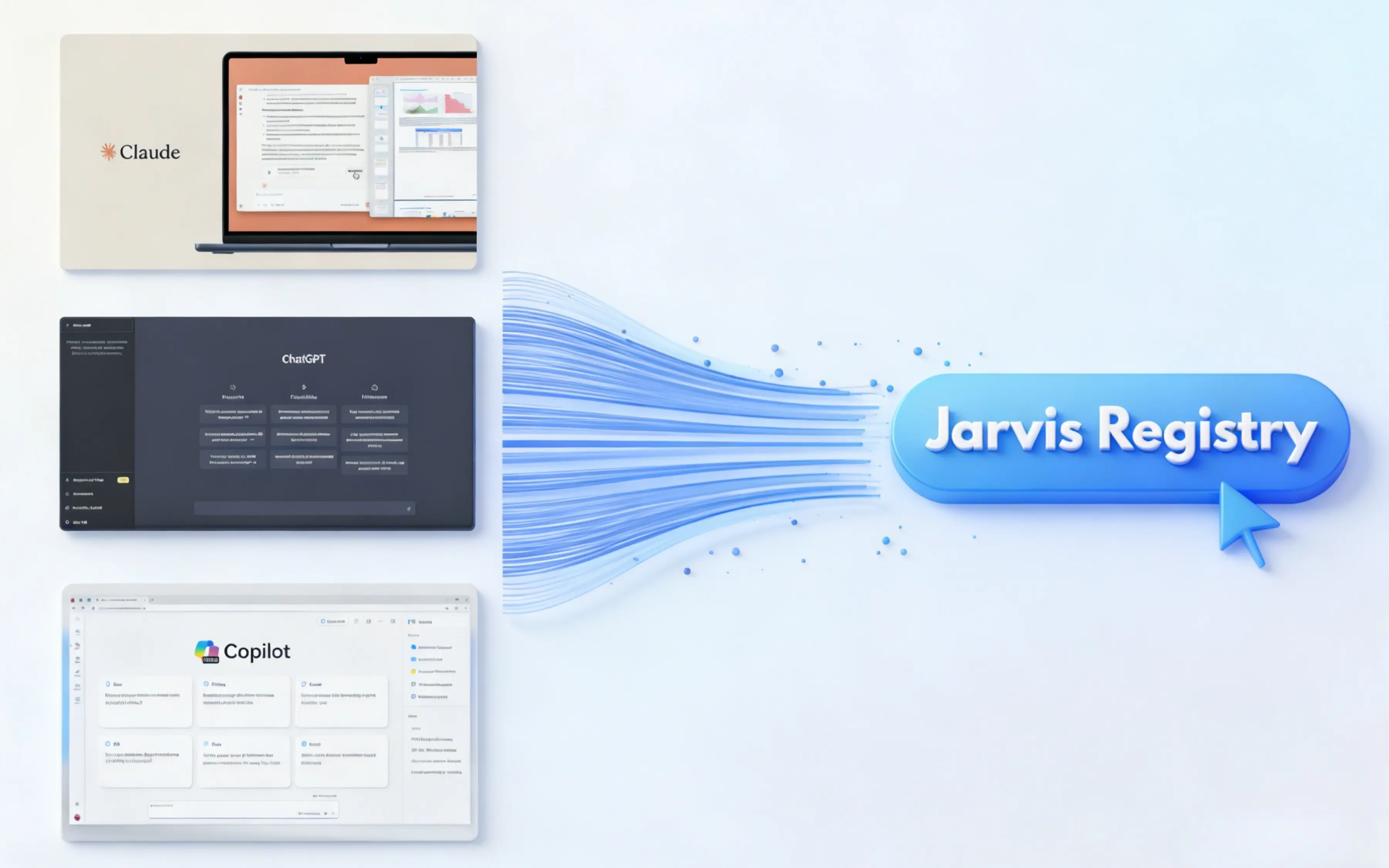
Jarvis Registry connecting enterprise AI copilots to governed MCP tools and agents
Jarvis Registry serves any MCP-compatible copilot, including Microsoft Copilot, Claude, VS Code, and Cursor.
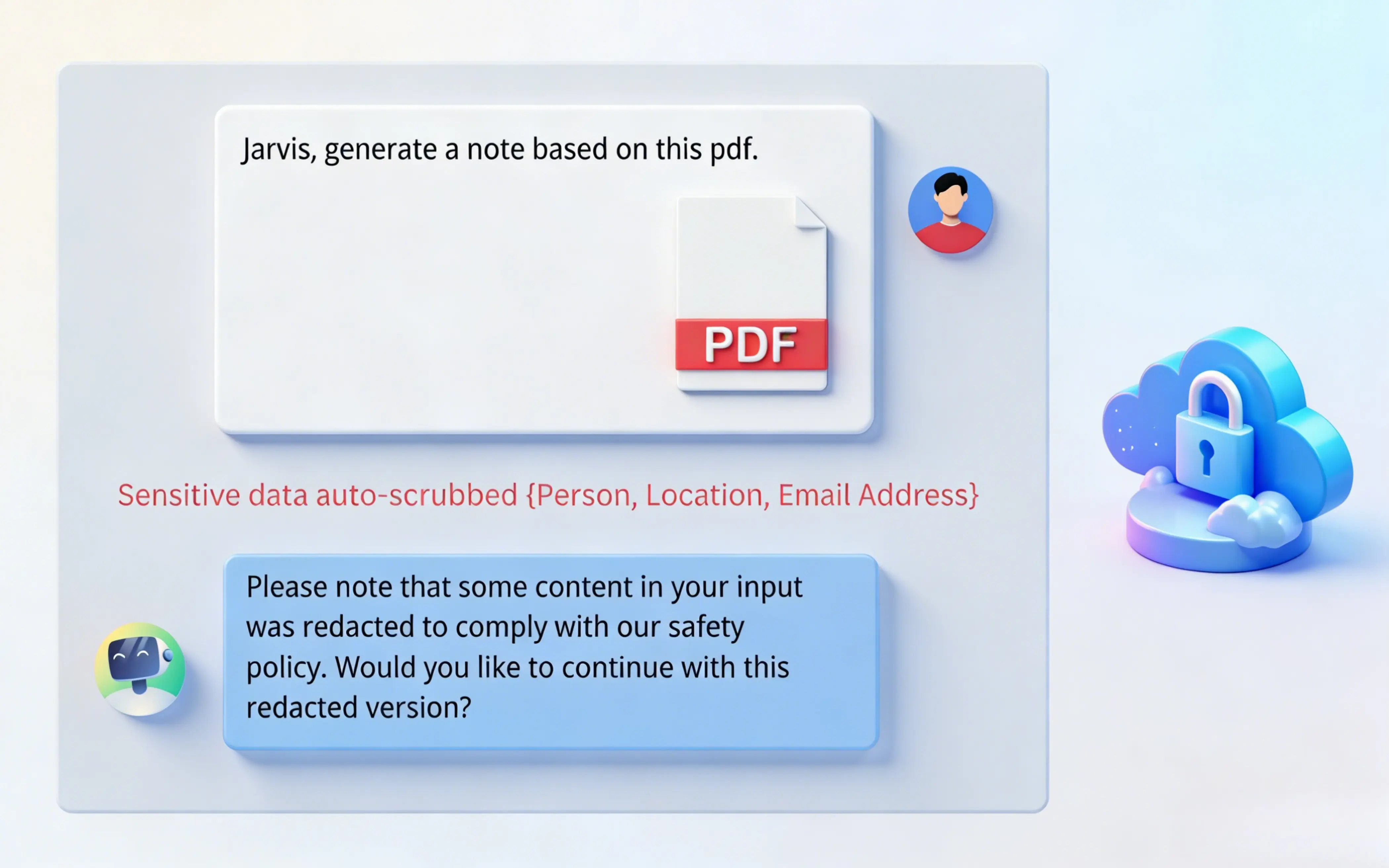
Jarvis Chat data privacy controls keeping enterprise prompts inside the customer environment
Jarvis Chat keeps every prompt, response, and uploaded document inside your own environment.

Related Jarvis AI resources

Each product has its own FAQ covering deployment, governance, and integration detail beyond the platform-level answers above.

Standards and references

Jarvis AI is assembled from published open standards rather than proprietary protocols, which is what makes a deployment reversible: every integration point below is documented by a third party, so nothing here depends on a specification only 1 vendor controls. These are the primary references the platform implements.

Still have questions?

Our team is happy to walk you through architecture, security, and pricing specific to your environment.